


Communities & Memberships
7 Best Whop Alternatives for Earning Online
We’re introducing 7 alternatives to Whop for different kinds of creators.
Author
Mighty Team
Last Updated
July 20, 2026


Table of Contents
Whop can be a useful option for creators who want marketplace discovery, flexible ways to sell digital offers, and tools for paying members or affiliates. But the marketplace model also means more competition, less control over the surrounding experience, and fees that scale with revenue.
If you’re ready for a Whop alternative to grow your digital business fast, you’re in the right place. In this article, we’re introducing 7 alternatives to Whop for different kinds of creators.
We’ll cover:
What Whop is and its pros and cons.
What to look for in a Whop alternative.
7 alternatives for all types of creators.
Some FAQs about switching from Whop.
Whop Alternatives - Quick Reference
Here's a quick reference chart for Whop Alternatives. We go into more detail below.
Best Features | Use For | Starting From (annual billing) | |
|---|---|---|---|
Communities, AI member engagement, flexible Spaces | Creators & brands building paid communities | $79/mo | |
Marketing funnels, email, and pre-recorded course LMS | Async course creators with a marketing focus | $143/mo | |
Free real-time voice, video & chat at massive scale | Free communities, gamers & hobby niches | 10% cut on web, up to 30% on mobile (US-based only) | |
Website builder with built-in digital product sales | Beginner creators wanting websites + gated content | $42/mo + 5% fees | |
Sell almost any digital product, no monthly fee | Independent creators wanting simple, low-commitment sales | 10% + $0.50/sale direct, 30% via Discover marketplace | |
Simple forum-style community with built-in discovery | Creators wanting low-cost, no-frills communities | $7.50/mo (10% transaction fee) | |
Native video, podcast hosting & fan subscriptions | Podcasters, artists & creators with an existing audience | 10% platform fee + processing |
What is Whop?
Whop is a community marketplace platform. It was founded by a trio of 25-year-olds: Steven Schwartz, Cameron Zoub, and Jack Sharkey in 2021. The platform had a simple mission: "make people a lot of money on the internet." It has different ways to earn money (called "whops"), and uses a community, course, and user challenge model to earn both Hosts and members money. Whop positions itself as a "digital Etsy for expertise."


One unique thing about Whop is its Discord-style interface, with a community feel, that makes both Hosts and members money. Whop is a marketplace, focusing on lots of public exposure and discoverability to drive growth. It also uses a modular software approach– AKA "apps" –so that creators can add or remove the features they want.
Whop is seeing fast growth, especially in India, Pakistan, Morocco, and South Africa where it can create accessible income for young creators.
Here are some examples of whops:
A pre-recorded digital course
An affiliate group for selling a digital product on social
A group that rewards members for cutting and sharing content
Paying members for creating UGC content
Access to other groups on other platforms (ie. Discord or Telegram)
Key numbers
Around 2.7% + $0.30. The commission Whop takes from transactions that start in the marketplace OR from an affiliate referral.
40,000 - The monthly active earners
20+ million - The number of people on the platform.
$74/mo - The median monthly revenue (according to WhopTrends)
88% of products earn 0 revenue (according to WhopTrends)
Whop offers
Easy checkout and lots of payment options (inc. crypto)
Built-in forums, chat, and livestreaming
High customization with modular software apps
Affiliate programs and member rewards
Discoverability and marketplace approach
Mobile apps for all devices
Whop pros
Marketplace approach could drive high discovery and exploration.
It can earn money for both Hosts and members of communities.
It's flexible with features that can be turned on or off.
Easy to run affiliate programs and content rewards to pay members and drive growth.
It connects to other software like Discord or Telegram.
Whop cons
Lots of distraction and competition for any offer.
Lots of spam, fake links, and fake offers that can either waste time or actually scam people.
Many of the member payouts can be low (e.g. a few dollars).
The majority of platform products earn $0


What to look for in Whop alternatives
Marketplace vs. dedicated content creator platforms: Whop's marketplace makes you findable–but it also comes with a high amount of spam, scams, & competition.
Flat-fee vs. revenue share: Decide if you want to pay a flat fee or have a platform take a percentage of your earnings.
The features you need! Whop's modular approach is flexible, so choose an alternative that lets you offer what you need.
AI tools: What automations and AI boosts does the platform have?
Real business tools: Look for real features to build a thriving business: data ownership, branding, member management, and more ownership of sales and packages.
Branding: If it's important to you, look for a platform that can be customized to build your brand and attract the right members.
The right offer features: You can't sell livestreams on a platform without livestreaming. Make sure the platform fits the offers you want to create.
How we evaluated Whop alternatives
The best Whop alternative always depends on what your goals are. With that in mind, here are some of the criteria we used to help you figure out which one is right for you.
Fee structure: Does the platform charge a flat monthly fee, take a percentage of your revenue, or both?
Discovery vs. dedicated community: Does the platform list your offer in a public marketplace, or do you need to bring your own audience?
Feature flexibility: Can you toggle features on or off to match what you're actually offering, like Whop's modular "apps"?
Monetization pathways: What can you actually sell (e.g. memberships, courses, coaching, events, digital downloads, affiliate programs)?
Branding and ownership: Does the platform let you build under your own brand and keep ownership of your audience and data?
AI tools: What automation or AI features does the platform offer for content, engagement, or admin work?
Native features: Does the platform natively support the specific things you want to sell or run?
Mobile experience: Are there dedicated iOS and Android apps, and are they well-reviewed? Can you add a branded app if you want?
We've ordered the list below roughly by how much of Whop's all-in-one functionality each one replaces, starting with the most complete alternatives.
7 Whop alternatives
Mighty Networks
Best Whop alternative for paid communities
Best for: Creators ready to build serious community businesses with multiple revenue streams
Mighty Networks is an all-in-one community platform that's top rated by the review site G2. It lets you build paid membership communities, and connect things like courses or virtual events. It also has a similar customization level to Whop's "apps." You can toggle on features you want like Chat, Member Discovery, Activity Feed, Live or Pre-Recorded Courses, Messaging, Single or Recurring Events, or Pages.


Features
Flexible Spaces for creating public, private, or paid experiences with community, courses, events, livestreams, resources, and discussions.
Built-in course and event tools for live courses, pre-recorded courses, livestreams, RSVPs, content drips, assignments, and course discussions.
AI-powered member engagement with smart profiles, member matching, conversation starters, profile assistance, and re-engagement tools.
Flexible monetization for courses, communities, coaching, downloads, events, streams, subscriptions, and bundled offers.
Native mobile apps, with premium branded apps available through Mighty Pro.


How to earn money
Membership & community subscriptions (recurring revenue)
1:1 or group coaching & masterminds
Live or pre-recorded courses
Virtual events and streams
Community-driven product launches
Mighty Networks Pros
More control over your brand and member experience than a marketplace-driven platform.
Multiple revenue streams can live inside one dedicated community space.
Better suited for recurring memberships, courses, events, and long-term community building.
Less built-in competition for attention because members are inside your community, not browsing a marketplace of competing offers.
Monthly platform fee plus lower transaction fees depending on plan.
Mighty Networks Cons
Higher platform fee initially
Some advanced customization is on higher-tier plans (see pricing for details)
It's not a marketplace. You'll need to find your own customers.
Kajabi
Best for async courses and funnels
Best for: Async course creators with budget for comprehensive marketing automation
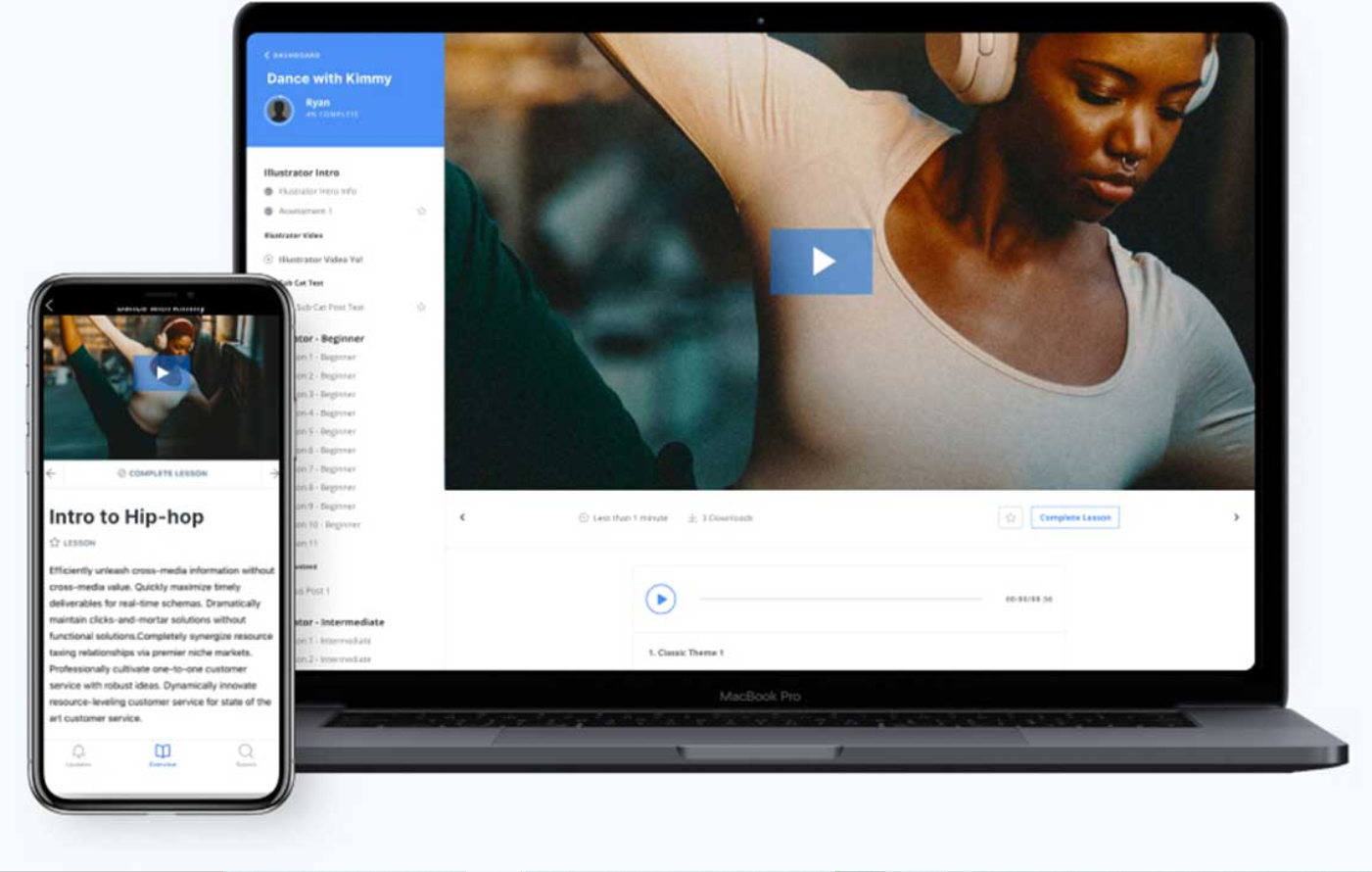
Kajabi is an all-in-one course business platform. It integrates digital business and marketing tools (read funnels) with a solid LMS for creators building pre-recorded courses. Kajabi has also added Kajabi Community 2.0, that can be used to host communities, live teaching, and live events.
Kajabi is strongest for creators who want courses, landing pages, email, and funnels in one platform. It also supports cohort courses with live video sessions, but creators focused primarily on member-to-member engagement may prefer a community-first platform.
Features
LMS that supports video, audio, text, & PDFs
You can add assessments & quizzes, drip content, and track student progress.
Build landing pages and sales funnels (from templates).
Connect email marketing for campaigns, sequences, and opt-ins.
Build custom course websites or use templates, with hosting and SEO tools.
AI course creation, landing page, and sales copy
How to earn money
Sell pre-recorded courses with 1-time payments, subscriptions, or bundles.
Offer memberships or live instruction on Kajabi 2.0.
Earn from affiliates & track commissions.
Product launches with built-in marketing campaigns
Kajabi Pros
Powerful marketing tools and pre-recorded courses that play together
Flexible course tools with activity tracking, assessments, or certificates
Excellent funnels and page building, with solid sales integration
Email marketing, lead pages, and sales pages built-in
Smart sales tools to improve conversions
Kajabi Cons
Community 2.0 is separate from the course platform (awkward UX)
Courses and community don't seamlessly connect
Community features are underdeveloped
Discord
Best for free communities
Best for: Creators wanting to build engaged communities without upfront costs, especially in gaming, tech, and hobby niches
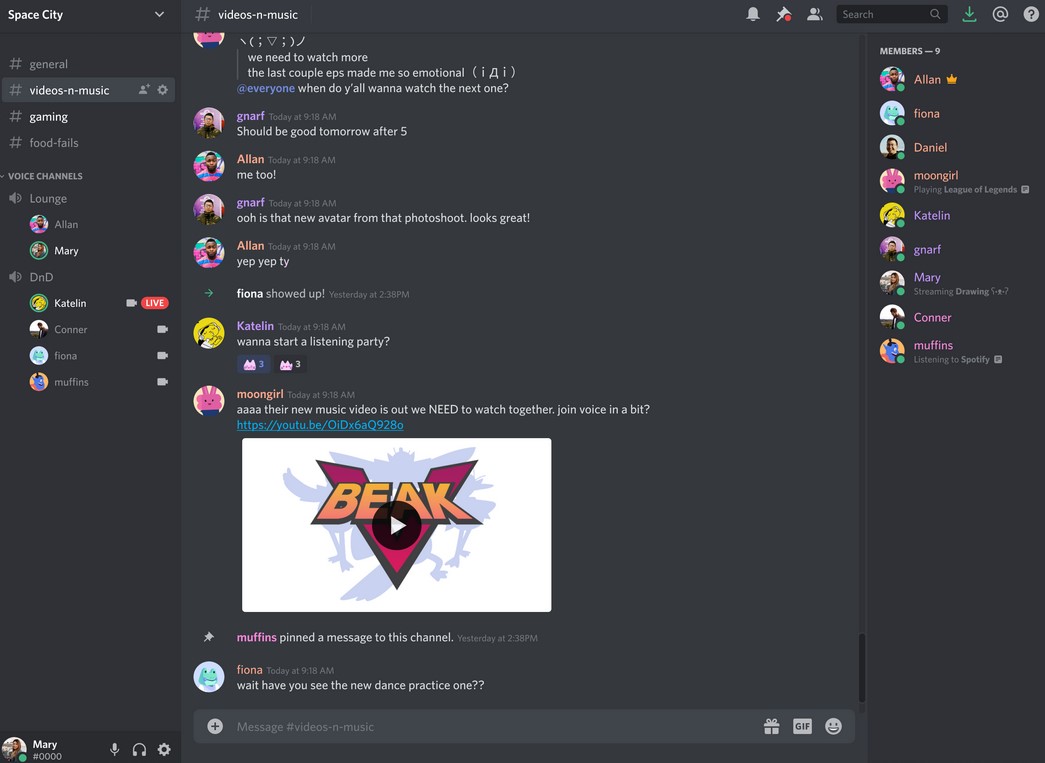
Discord is the world's biggest free community forum and chat platform with 200 million users. It's built with gaming and streaming in mind, with real-time communication on-board (e.g. voice chat).
Discord Servers can be built around a main community and separated into different channels: text, voice, or announcement channels. It has some good but basic community management and mod controls.
Discord does have a monetization option (Server Subscriptions), but eligibility is restricted to US-based server owners. Discord keeps 10% from eligible server monetization, and subscriptions initiated through iOS may also be subject to Apple's additional fee.
Features
Threaded discussion forums with images, videos, GIFs, and file sharing
Text, voice, and announcement channels + stages for large events
Stream gameplay or your screen to members
Scheduling and promoting events
Real-time text messaging (with emojis and reactions) and high-quality voice and video calls.
Server customization with branding and cool stickers
Automated tools and bots for moderation, games, and admin
Apps for every device and integrations with Whop and Twitch
How to earn money
Server subscriptions (US-only. It requires approval and Discord takes 10%)
Boost perks on a monetized server (e.g. premium stickers)
Discord Pros
A free, powerful community platform
Fantastic for livestreaming, voice events, and community chats
Perfect for gamers to stream and chat
Solid discussion forums, messages, and notifications
Some server personalization options
Discord Cons
No real monetization options (most hosts won't qualify)
No ways to accept payments, while alternatives have this built in
Minimal branding and customization options
Limited analytics
Discord controls all community data and access
Podia
Best for selling digital products on a website
Best for: Beginner creators who want websites and gated content
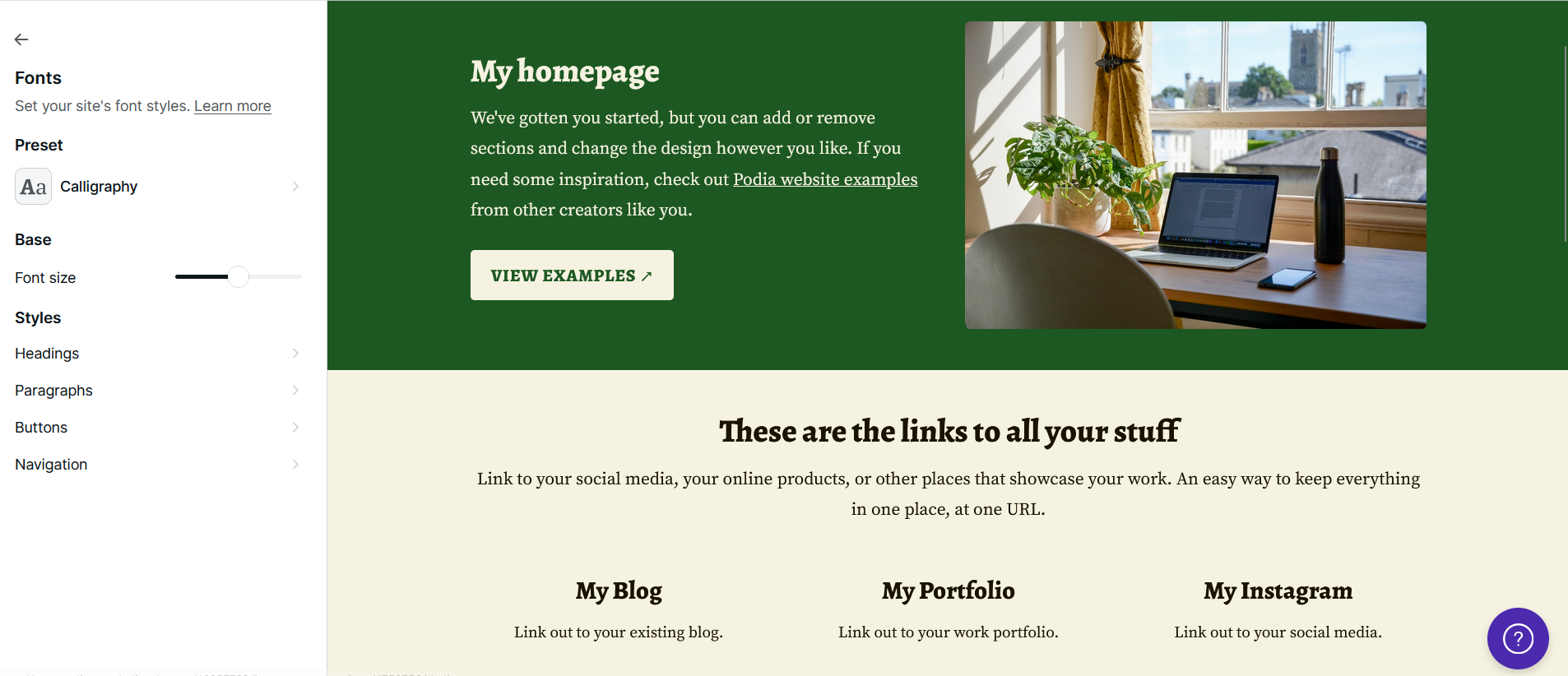
Podia is a website builder with a lot of options for creating digital products built in, including courses, memberships, and coaching (with calendar). For creators who want an option for simple course or product sales with more powerful websites, it may be a good Whop alternative.
Podia offers websites with integrated ecommerce and sales infrastructure, and it even has email marketing. It's comparable to Kajabi, but with a stronger focus on websites over courses. Podia's product features aren't as good as its website features.
Features
Drag-and-drop website & sales-page building with templates
Built-in basic email with referral system
Sell digital downloads, webinars, gated content, or bundle products.
Calendar integration and appointment management for coaching sessions
Simple course building with LMS that supports video, audio, or text content
Simple design options with basic progress monitoring.
How to earn money
Direct sales of courses, PDFs, webinars, or packages
Subscription access to content or a forum
Sell coaching and sessions with built-in scheduling
Podia Pros
Easy to use for great-looking websites
Sell different kinds of digital products easily
Lower starting price than Kajabi for comparable features (although it has 5% fees)
Simple email and calendar integration
Podia Cons
Digital products like courses and communities lack advanced features
A jack of all trades, master of none
Courses look like blog posts & reporting is weak
Missing events and streaming
Gumroad
Best for monetizing or selling almost anything
Best for: Independent creators wanting simple digital product sales without monthly fees
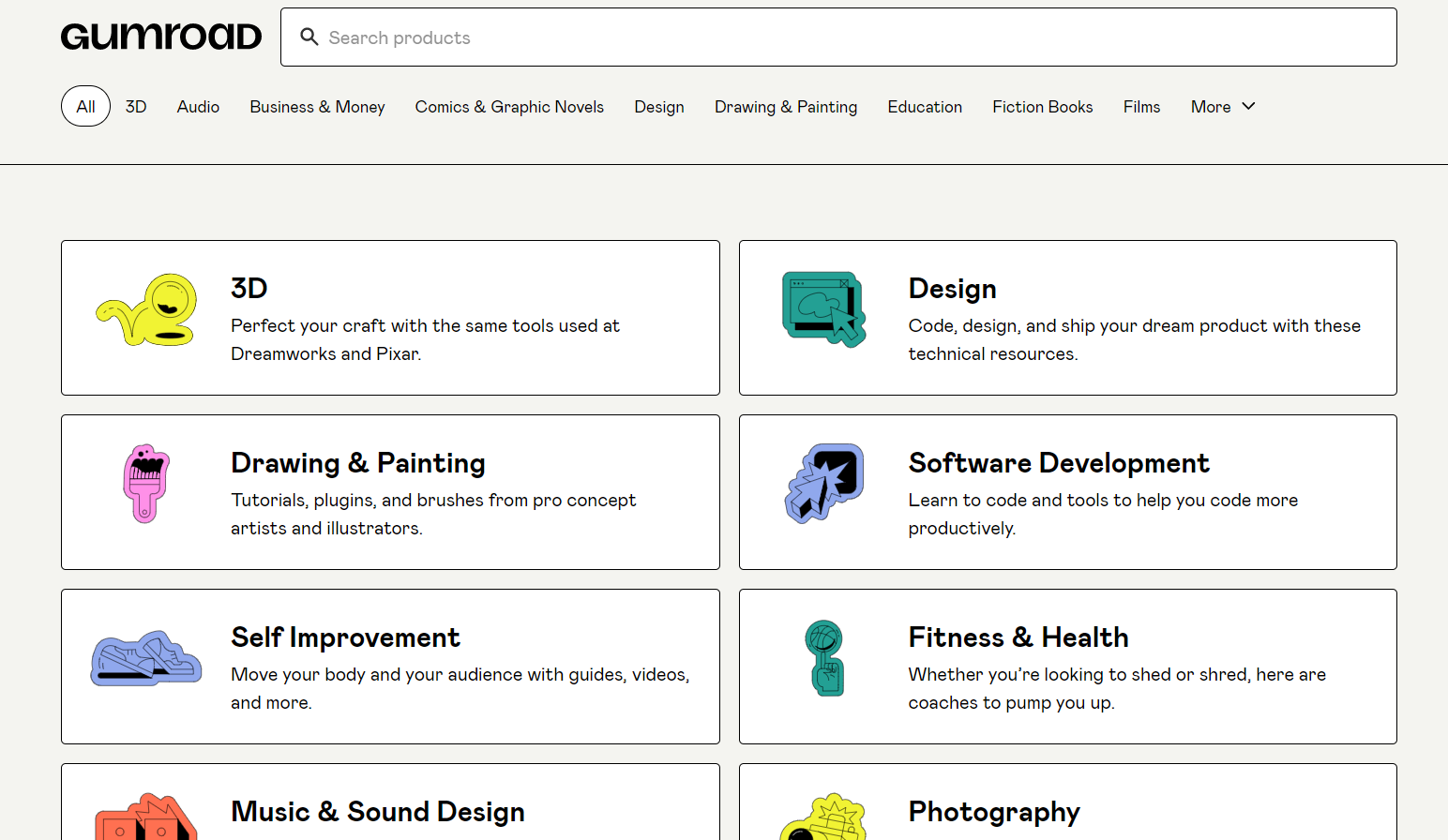
Gumroad is a similar concept to Whop, with a digital product marketplace and creator platform. It has a similar flexible approach, letting the creator monetize almost anything they can come up with. It's strongest for downloads, courses, and subscriptions.
Gumroad currently takes a 10% + $0.50/sale cut and a 30% cut on products sold via discover.
Features
File hosting, instant delivery, multi-product version options, and packages.
Support for ebooks, PDFs, templates, courses, audio, graphics, and more.
Customized storefront and creator pages, product landing pages, and insights
Sell subscription products with different membership tiers and levels
Built-in licensing so that creators can control how their products and IP are used
How to earn money
Sales of digital products
Sell subscriptions (e.g. premium content or memberships)
Gumroad Pros
The marketplace option means you can be discovered.
Easy to set up and you can sell pretty much anything.
Flexible ways to charge and earn.
You own your relationships with members, customers, etc.
Good sales infrastructure (product pages, sales, coupons, etc.)
Gumroad Cons
Options for courses are quite basic
No integrated livestreaming or real-time interactions
Restricted branding and design options
Skool
Best for low-cost, discoverable communities
Best for: Creators wanting simple forum-style communities with built-in discovery, but willing to sacrifice advanced features

Skool is a platform that's a lot like Whop, complete with discoverability. It really does have a lot of traffic exploring communities, giving increased potential for member growth.
However, Skool's community features are really basic compared to both Whop and others on this list. It allows for a simple community or a course, perhaps a Zoom event. Not much more.
Features
Basic community platform with reddit-style discussions and reactions
Create posts with text, videos, links, polls, and GIFs.
Simple user profile pages
Members get points and level-up by engaging.
A course builder–with a series of locked posts and progress monitors.
Skool homepage offers community discovery with topics and interests
Calendar and event pages, plus live calls on current Skool plans
How to earn money
Sell community memberships.
Sell access to gated courses or premium content.
Earn 40% commission for referring other creators to Skool
Skool Pros
Easy to use with some good basic forum features.
Members can discover courses and communities via the homepage.
Gamification can make members more likely to log on and contribute.
High affiliate commission for referring other creators (Hosts) to Skool
Skool Cons
Missing most features of a modern community platform (e.g. livestreaming, advanced discussion organization, Spaces/Channels, etc.)
Very limited branding or design options
Course builder is basically just a series of posts and not a proper LMS
Patreon
Best for exclusive content and fan subscriptions
Best for: Podcasters, artists, writers, and video creators with an existing audience who want ongoing paid support
Patreon is a well-known platform that can be used to turn fans into paying subscribers. Creators can publish exclusive posts, videos, podcasts, or behind-the-scenes content behind paywalled membership tiers, and patrons pay monthly (or annually) to access it. Unlike Whop, there's no marketplace or discovery layer. Patreon works best when you're bringing an audience you've already built somewhere else (YouTube, a podcast, social media) rather than finding new fans on the platform itself.
Patreon has expanded well beyond simple posts in recent years, adding native video hosting, livestreaming, community chats, and podcast distribution. And these are all bundled into the platform fee rather than sold as separate add-ons.
Features
Tiered membership levels with different pricing and perks
Native video hosting and livestreaming (up to 100 hours/month)
Community tools: chats, DMs, comments, and member-only spaces
Podcast importing and distribution, with Spotify and RSS sync
Built-in email newsletters with exportable subscriber lists
Free trials, discounts, and member analytics
How to earn money
Recurring monthly or annual membership tiers
One-time purchases for digital products or individual pieces of content
Merch sales (via integrations)
Patreon Pros
No monthly fee, you pay when you earn
Strong brand recognition
Native video, podcast, and community tools bundled
Patreon handles payments, taxes, and fraud protection
Patreon Cons
Platform fee takes 10% of earnings
No marketplace or discovery
Not built for interactive communities
No course-building tools
Small pledges lose a disproportionate share to fixed processing fees
Conclusion
Whop has lots of flexibility, but also a lot of distractions. The options above offer different benefits for different creators, but hopefully there’s a Whop alternative on this list for you.
And if you want to build a paid community with courses, events, livestreaming, AI engagement tools, and more control over your brand, Mighty Networks is worth considering.
It’s free to try for 14-days, no credit card required.
FAQs
1. What's the main difference between Whop and other creator platforms?
Whop is a marketplace where creators can sell digital products and communities. Whop has more discovery than most platforms, and ways for members to earn from UGC, which is its unique feature.
2. Which platform is closest to Whop's marketplace model?
There are a few choices. On this list, Gumroad has similar discoverability for products. Skool for communities. Or–not on this list–Udemy and Skillshare have a similar premise and are marketplace course platforms.
3. Can I migrate my existing Whop community to another platform?
Absolutely. Some platforms offer migration assistance if you have a large, established community. Mighty Pro offers help with moving communities onto branded apps.
Otherwise, you'll need to export your member list and create a plan for making the move. Create awareness with posts about it or by emailing members, and make the jump! We also have a full guide to migrating a community.
4. Do I need technical skills to run a community on these platforms?
No. All of these platforms are created to be pretty intuitive. While the UX varies, each of them is geared to be self-serve for creators to build and find what they need. The main place you run into technical walls is trying to build on platforms that are complicated–for example, trying to use WordPress plugins to create communities. Then it can be tough.
But for the platforms on this list, you'll be fine!
5. Which platforms let me sell both courses and community access together?
Mighty Networks is a great option for this, seamlessly blending courses and community together. It offers flexible Spaces that you can customize with a bunch of different features.
6. Can I offer affiliate programs like Whop does?
Yup! Most of the options on this list have similar ways to run affiliate programs.
Mighty Networks affiliate details here.
Kajabi has a built-in affiliate program for sales.
Podia has an affiliate program built-in.
Skool includes a member-to-member affiliate program (can be set at 10 - 50%)
7. Which platform has the best mobile experience?
Mighty Networks and Discord both have fantastic mobile apps–available on the App Store and Google Play Store and well-rated. Mighty Pro gives you completely branded apps on your own platform. Patreon has an excellent app as well.
8. Which platforms support live streaming like Whop?
Here are some of the platforms that offer integrated livestreaming:
Mighty Networks (all plans)
Discord (free, excellent for gaming)
Telegram (basic broadcasting)
Most others require Zoom, YouTube Live, or similar integrations
9. I run a gaming community - what's the best Whop alternative?
Probably Discord! It's free, simple to get up and running, and has lots of game streaming options like chat and screen-sharing. An alternative to this might be Steam or Chanty, but there are more chat apps to learn about before deciding.
10. I want to build a paid mastermind - which platform works best?
Want to build a paid mastermind group?
Try Mighty Networks:
Easy to build small groups and manage membership.
Integrated livestreaming (or Zoom connection if you prefer).
Member-to-member networking with powerful profiles and AI conversation-starters built in.
Integrated payment processing and landing pages.
Lots of Space controls to manage privacy.
Skool could be an alternative for a simple mastermind on a low-cost platform.
11. Are there any completely free alternatives to Whop?
Here are a few completely free options:
Discord: Full community features but no real monetization.
Telegram: Broadcasting and basic groups with some monetization options from ads.
Facebook Groups: Community building, but–again–gets tricky if you want to monetize.
Ready to start building your community?
Start a free 14-day trial to explore Mighty—no credit card required.
More like this


Join Mighty Community
Learn the principles of Community Design™ (and see them in action) alongside thousands of creators and entrepreneurs. It's free to join!


Online Courses
Creating a Course
Teaching a Course
Course Platforms
Selling a Course
Communities & Memberships
Community Platforms
Managing a Community
Building a Community
Growing a Community
Monetizing a Community
Creators & Entrepreneurs
Monetization
Content Creation
Starting a Business
Website Builders
Creating & Managing a Website
Events
Event Platforms
Hosting & Marketing Events
Branded Apps
Creating a Mobile App
Coaching Apps
Community Apps
Coaching
Mastermind Groups
Starting a Coaching Business
Coaching Platforms
Filter by Category
Online Courses
Communities & Memberships
Creators & Entrepreneurs
Events
Branded Apps
Coaching
Start your free trial
14 Days. No Credit Card Required.