


Creators & Entrepreneurs
The Ultimate Guide to High-Ticket Memberships and Coaching (2026)
Here’s how to build a high-ticket business around memberships, coaching, masterminds, or digital products.
Author
Mighty Team
Last Updated
May 19, 2026


Table of Contents
- What counts as a high-ticket sale?
- Here’s why high-ticket memberships and coaching work
- How much can you make with high-ticket offers?
- How to master high-ticket sales
- 1. Understand your Ideal Member
- 2. Get the high-ticket psychology right
- 3. Build authority and social proof
- 4. Qualify leads
- 5. Build the right offer
- 6. Create members, not customers
- 7. Exceed expectations
- 8. Choose the right business model
- 9. Master objection handling and closing
- 10. Onboard members for long-term success
- High-ticket sales models
- Funnels vs. Flywheels: Which is better for high-ticket sales?
- How a private community supercharges high-ticket coaching
- Why Mighty Networks for high-ticket memberships and coaching
- Conclusion
In this article
- What counts as a high-ticket sale?
- Here’s why high-ticket memberships and coaching work
- How much can you make with high-ticket offers?
- How to master high-ticket sales
- 1. Understand your Ideal Member
- 2. Get the high-ticket psychology right
- 3. Build authority and social proof
- 4. Qualify leads
- 5. Build the right offer
- 6. Create members, not customers
- 7. Exceed expectations
- 8. Choose the right business model
- 9. Master objection handling and closing
- 10. Onboard members for long-term success
- High-ticket sales models
- Funnels vs. Flywheels: Which is better for high-ticket sales?
- How a private community supercharges high-ticket coaching
- Why Mighty Networks for high-ticket memberships and coaching
- Conclusion
Too many creators are in a race to the bottom. They’re earning pennies from affiliate links in posts, selling e-books, or monetizing through display ads.
There’s a better way. A way that goes against everything you’ve heard about viral posts, slick funnels, and thousands of sales.
And it’s counterintuitive. Stop chasing the masses, and build a business that serves fewer people and offers bigger transformations at higher prices. That’s a high-ticket business.
In this post, we’ll introduce you to high-ticket digital products and experiences: focusing specifically on coaching and masterminds. We’ll show you why high-ticket often means happier customers. And we’ll give you a guide to creating a high-ticket membership offer.
Try the ultimate platform for high-ticket memberships, coaching, and courses!
What counts as a high-ticket sale?
Here’s a quick rule of thumb. You could consider a $1,000 digital product as a high-ticket sale. You can consider a $3,000 coaching program as a high-ticket sale. Or you could consider a membership that costs $500/mo as a high-ticket sale.
It’s not a perfect science. But these numbers are a good starting guideline.
There was a time when a high-ticket sale meant a car or a watch. And–of course–it still could.
But modern high-ticket is more about high-ticket transformation. Building a business with fewer customers, with higher investment, who will experience something truly life-changing.
With digital products and experiences, there’s always a lot of lower-ticket offers. There are people working to make pennies on the dollar. But unlike mass-market sales, which focus on the lowest price, sales, and buyers who are looking for a bargain, high-ticket sales appeal to a more discerning buyer--no matter the industry.


Here’s why high-ticket memberships and coaching work
What makes high-ticket offers succeed?
What did our data tell us about successful high-ticket products? Here’s what we’ve noticed:
Some (not all) high-ticket sales on Mighty are for digital products that cater to businesses instead of individuals. By moving up-vertical, you can charge more.
Many of the high-ticket sales for individuals are products and services geared towards personal excellence: for example, health, spirituality, money, entrepreneurship. These are areas where people are willing to spend more for excellence.
A lot of high-ticket membership and coaching sells based on exclusivity, quality, and excellence.
Even a modest membership base for a high-ticket offer can generate serious revenue.
Many high-ticket sales on Mighty are for specialized knowledge (as opposed to generic). This is why it’s crucial to get your Ideal Member right!
Why you should sell a high-ticket product or service
You'll make more
You might think, "Duh. Charging more equals making more."
But we can know this instinctively and still think the wrong way. If your revenue model requires selling millions of something to succeed, here's a tweak. How could you create a thriving business by only selling thousands? Or hundreds?
If you sell something for $5, you need to reach 200,000 customers to have a million-dollar business. If you sell something for $1,000, you can get to a million a year by selling 1,000.
Creating offers like a high-ticket membership or even high-ticket coaching lets you make the money you need with way less people. Then you can focus on making sure those who do come are successful. It’s a win-win for both the creator and member.
You can use value-based pricing
Too many creators and businesses start by pricing things according to what they put into them. It’s a common rookie mistake, and it’s called the Labor Theory of Value.
For example, if it takes you three hours to make a course and your day job pays you $30/hr, you should sell the course for $90… right?
NOPE! Value-based pricing means pricing according to what a product is worth to a customer, not the time it took to create it.
If your course helps a business owner generate an additional $150,000 in revenue this year, then it’s worth much more than $90 to them.
People will value it more
Would you believe that paying more for a digital product or experience can lead to better engagement? In the psychology of consumption, people are more likely to use a product if they’re aware of a higher cost.
People value what they pay for thanks to something called the “sunk-cost effect.” When people put money into something, they’re more likely to use it. Or–in other words–people value what they pay for.


Your members will experience more transformation
What if we told you that not charging enough can hurt your customers?
It’s counterintuitive, but paying more for something helps someone value it, which helps them use it, which helps them transform. And that’s why pricing something too low can actually hurt your members.
Do you value Tiffany's jewelry more? Or cheap, costume jewelry?
It's the same principle with online courses, communities, services, and digital products.
When people pay more, they increase their chances of success.
How much can you make with high-ticket offers?
Mighty is the platform with the most $1 million communities. So, we have some awesome data on high-ticket sales for courses and memberships.
Many courses and communities making high-ticket sales are earning anywhere from $20,000 - $100,000/mo.
Here are some examples using a few of the numbers we’ve seen:
A program for medical professionals sold 40 memberships at $7,000 = $280,000
A community helping financial advisors succeed offers a $1,000/mo membership. It currently has 30 members = $30,000/mo
A spiritual community with different tiers of memberships, the highest being $1,000 = $600,000
A community for health entrepreneurs has 55 members to a $1,800/mo membership = $99,000/mo
A podcaster and author sold a $997 course to 5,000 members = almost $5 million!
These are REAL numbers from REAL courses and memberships. They show the incredible potential for high-ticket sales of products that YOU create and sell.
How to master high-ticket sales
Think about this. Most human beings will buy something that's a high-ticket item at least once in their life.
It might be...
The dream vacation they saved for.
An engagement ring or fairy-tale wedding.
The coaching program that will change their life.
The dream camera to capture their memories.
An in-ground pool to make the backyard an oasis.
The question isn't, can I sell a high-ticket item? It's, "Can I find the right high-ticket offer for my ideal customer, member, client, etc.?"
And that's the trick to selling a high-ticket membership or coaching offer. Not high-pressure sales tactics to get people to buy something they can't afford. Spend the time to match the right offer to the right buyer, and you'll make magic. Mix it with a community flywheel and it will sell itself. (more on this below)
Here are the steps you can take to get the high-ticket offers right:
1. Understand your Ideal Member
Every product needs an ideal member, user, or customer–but it’s even more crucial for high-ticket sales. Nailing this is the foundation of everything else.
We learned this lesson at a recent conference that Mighty sponsored. One of the sessions was led by Tim Grahl--CEO of StoryGrid--who told the story of interviewing dozens (and eventually hundreds) of his ideal customers. Finally, it got to the point that he could jump on a call and say, "Let me guess. This is what you feel..."
And the shocked person on the other end would say... YES!

Tim gave us a masterclass in finding the ideal customer or member.
You obviously need someone who can afford what you’re selling, but you also need someone who sees the value and is willing to spend to get it.
And the best way to do this (that too many entrepreneurs skip) is to actually ask them.
You'll learn...
What their pain points actually are (not what you guess they are).
If they're willing to spend the money.
How to position the offer.
And what success would mean for them.
2. Get the high-ticket psychology right
Why do people buy high-ticket memberships or coaching? At the end of the day, they’re thinking about so much more than price.
People who buy high-ticket courses might pay for a transformation they can’t find anywhere else.
People who join a high-ticket mastermind might be in it for exclusivity.
People who pay for high-ticket coaching might be determined to get results they’ve dreamed of for a long time.
People who pay for high-ticket memberships might want to get in the room with people like them.
It’s important to understand why people will pay for your high-ticket product. But inevitably, someone will if you get the psychology right and can actually deliver.
3. Build authority and social proof
When you’re launching a high-ticket product, you need trust. Often, this trust comes from building a stellar personal brand and/or adding authority and/or social proof. The more people know they can trust you, the more comfortable they are paying high-ticket prices.
Here are some great ways to build these:
Collect testimonials and case studies from successful members. As a bonus, you could even recruit successful members to field questions from would-be members (perhaps offering a financial incentive). Nothing helps make future clients feel safer than glowing reviews from past ones.
Showcase any credentials or certifications you have and/or show off relevant experience.
Consider getting your ideas out there with thought leadership that helps you develop your ideas while building trust with your audience.
Collaborate with other authority figures. Things like shared webinars, invitations, or combined offers help you tie your credibility to theirs.
4. Qualify leads
Somewhere along the line, you make sure you’re selling to the right person. For example, with a high-ticket course this could be a person who needs the transformation you’re selling and who can also afford it.
Say you’re selling a social media marketing course, you might want to sell to businesses that already have a product and revenue.
Lead qualification for high-ticket sales isn’t just about making the sale–it’s also about ensuring your members have the right conditions to be successful. Because successful members will become your supers, they’ll tell the world.
You want them.


5. Build the right offer
Just because you've done the background work doesn't mean your high-ticket sale is made. You still need to build the right offer.
This includes figuring out the right vehicle for transformation.
People going on a long journey of transformation might need a membership or coaching package to help them on the way.
People learning a valuable skill once might need a course.
People looking for opportunities to connect in a mastermind might want a series of in-person or virtual events.
And yes, if at all possible, you should be building an offer to fit your Ideal Member. The offer itself needs to speak exactly to the growth point your customer or member is searching for.
Think about their lives too. Are they busy entrepreneurs? Then an immersive, week-long workshop might not be the right approach. Find the right style of delivery to meet them where they’re at.
It's always easier to create an offer that fits than to try to get your customers to buy an offer that doesn't.
6. Create members, not customers
One thing we're passionate about--if it fits--is creating members.
Customers are transactional. Members belong. And that’s what makes online communities so beneficial to businesses.
Imagine you sell high-end BBQs. Which is going to help you sell more? Optimizing a funnel perfectly with Facebook ads? Or creating a membership site where grillers can come together, share ideas, recipes, and talk about the product. (Of course, you might do both.)
Creating an environment where people feel they belong is what makes high-ticket sales work. That's community-led growth.
Repeat business is the bread and butter of so many thriving brands. And creating a membership can create repeat business around your high-ticket sales.
Again, this needs to fit your Ideal Members and their journey.
7. Exceed expectations
Of course, when you deliver a product or service, it’s important to make sure you exceed expectations too. The ability to create a “wow” factor is what creates the all-powerful word of mouth and drives member-led growth.
With memberships, we like to think of "the best year ever." What is it that will help your Ideal Member have the best year of their life, with results and transformation they've never experienced before?
That's what you should build. And that thing--whatever it is--is perfect for high-ticket sales.
8. Choose the right business model
It’s so simple, but true. Mastering high-ticket sales isn’t about creating the perfect sales letter or copy. It’s not about setting fake deadlines to force “urgency” or pressuring your leads. That’s the funnel approach to high-ticket sales, and it’s becoming less and less effective–we’ll break this down below..
The way to master high-ticket sales is to choose the right business model to begin with.
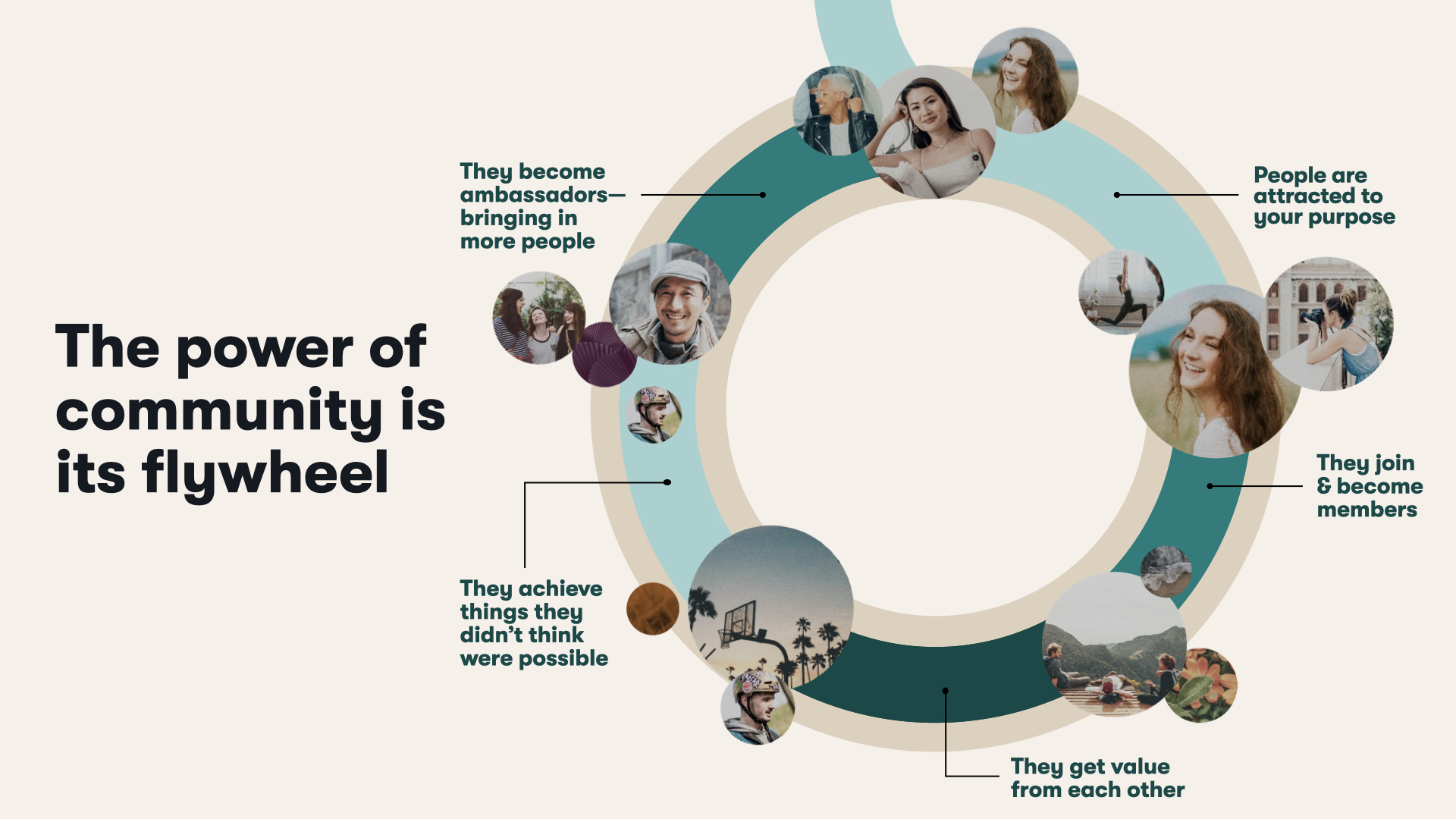
And that makes selling a high-ticket product or service much easier. We're big on creating community flywheels. But ultimately you have to find what works for your brand.
9. Master objection handling and closing
Here are a few tips to help you close the sale and handle objections. Remember, this isn’t just about pressure selling. You want to make sure you’ve found the right members for your high-ticket offer. But here are a few ways to respond to common objections.
“It’s too expensive.” Help them frame the value of what the transformation would be worth to them. Help them understand what it would mean to not get that transformation. For example, for a high-ticket business coach, the potential outcome is literally making much more money!
“I’m not ready right now.” Ask what’s going to change in a year or two that will make them more ready than now. What would it take to feel ready? Is that going to happen? Is it worth waiting for?
“I need to think about it.” This is a fair response, but see if you can help them narrow down what there is to think about. Do they need more information? Someone else’s approval? Are they questioning if the transformation is the right one? Whether you make the sale right now or not, clarifying what’s standing in the way can often help them move forward–even if it’s not today.
You can offer flexible payment for your high-ticket programs. For example, this could mean adding in options for payment plans, automated payments, or different bundle or delivery options for people with different budgets. Flexible payment plans make it more likely that people can say yes to your program–especially if they can pay over time, and especially if they can start to see results before their payments are done.
10. Onboard members for long-term success
Once you sign members, create a standard onboarding process to get them going. This helps them know what to expect, while also minimizing challenges and confusion. Here are some things a great onboarding process can do:
Create clear expectations. When members’ expectations don’t match their reality, it’s a recipe for upset.
Set members up for early wins. This helps them get motivated and trust the process!
Set your times and rhythms for regular check-ins, events, masterminds, etc.
Connect them to other people! The greatest transformations often happen in a community–make sure members have a chance to meet and engage with each other.
Create accountability moments to help members reach goals.
Create feedback loops for members to input into your program and their own growth.
High-ticket sales models
If you've done everything right from the steps above, how do you structure a high-ticket business?
There are a few different ways, but let's talk about two of the most common models for selling high-ticket items:
The funnel
A funnel has been the dominant sales model in marketing both physical and digital products for a long time. It focuses on moving customers through four stages: awareness, consideration, conversion, and finally loyalty (which creates repeat customers and word-of-mouth promotion).
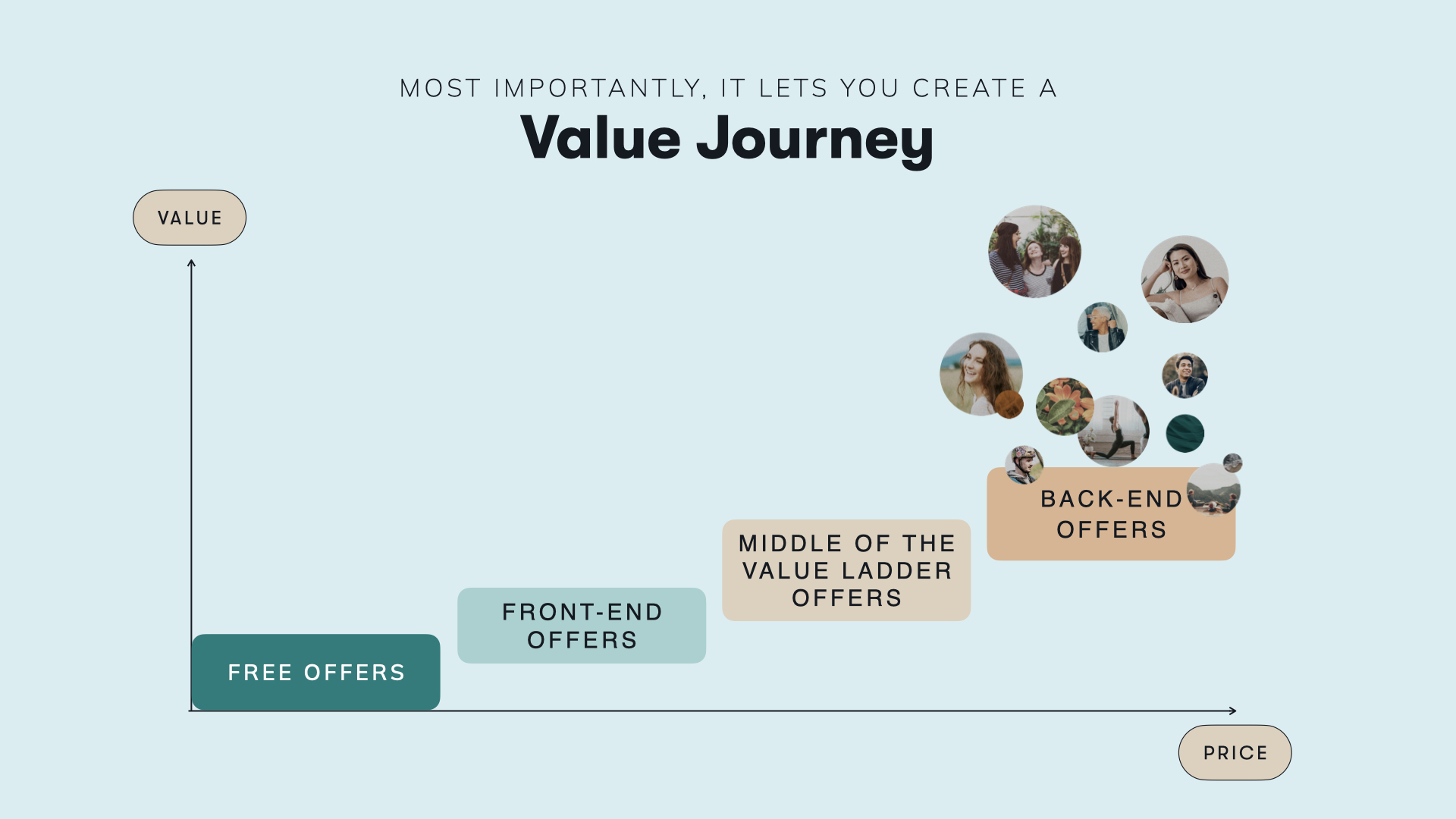
A funnel makes it easy to reach mass users through paid social media and then to convert a small number of them into an offer. But if you’re running a funnel in the 2020s, you’re engaged in a mass, high-stakes competition with similar brands AND customers are frankly aware of what’s happening.
We all know the feeling of being sold to–and the “this is your last chance” messages don’t work like they used to.
Brands liked funnels because of their predictable revenue. For example, if you know you have a 2% conversion rate and you push 20,000 people through your funnel, you can be reasonably confident that 400 people will buy.
Funnels have their place, but there’s a way better method.
What is a high-ticket sales funnel? A membership site sales funnel moves your ideal customer through a series of steps, losing people at each one until you serve up an offer to the percentage of people who make it through.
The community flywheel (better)
The community flywheel is an emerging business model that focuses on getting your supermembers into community with you and letting the conversations and member engagement build the brand and drive sales.
It comes down to this. Your goal should be to constantly be converting your subscribers, followers, customers, or whatever, into members.
All those things are transactional. But members belong. Businesses that choose a member-led approach see a huge benefit in growth.
Flywheels require four things: Entering into community with your members, choosing “hero” products, bringing in a powerful brand story, and co-creating content with members, all of which lead to effortless transactions.
Unlike funnels, community flywheels can experience rapid member-led growth as your supers become your biggest promoters. AND unlike funnels, a community flywheel is a content engine that you don’t have to run (at least not entirely), since your members show up and create content and conversation for free–or even pay to do it.
If you’ve experienced thriving brand communities, you might have experienced a community flywheel.
A community flywheel is the secret to building a thriving member-led business, and you can unlock it by giving your members something to belong to.
Funnels vs. Flywheels: Which is better for high-ticket sales?
What happens to prospects who don't buy?
Funnels: They’re gone. Maybe they stay on your email list if you’re lucky.
Flywheels: Members stay in your ecosystem and buy when they’re ready OR find other offers they love.
Who does the selling?
Funnels: You do.
Flywheels: You and your members are both involved, thanks to member-led growth and word of mouth.
How does the sale happen?
Funnels: Through a high-pressure offer or slick marketing copy.
Flywheels: Effortless sales because your members are in your ecosystem ready to buy.
Customers move in a…
Funnels: Straight line (until they drop off)
Flywheels: Circle (staying engaged)
How do additional sales happen?
Funnels: Upsells or finding new customers
Flywheels: Engaged members look for more products and services (sometimes they even ask for them).
How does customer acquisition work?
Funnels: Keep spending money to fill the top of the funnel.
Flywheels: Member-led growth means that it grows organically through word of mouth.
How a private community supercharges high-ticket coaching
Here's the thing about one-to-one coaching. It's a great business. It will transform lives.
But it doesn't really scale. If you are the coach, you need to do all the coaching. That's okay if it's high-ticket coaching. But what if you could scale this even more?
A membership does this. It brings people together, sharing a journey, and members help each other transform. It's no longer about a one-on-one relationship with the coach. It's about belonging in a group of like-minded people led by a shared host.
Adding a membership to a high-ticket offer creates amazing results. In a membership, people aren’t alone. They go through transformation together. Creating a private community offers:
Higher engagement and higher retention as members connect to each other.
Members create value for one another by sharing ideas, content, and stories.
The community boosts accountability, since members see each other commit to goals and encourage each other.
Members know they aren’t alone, making the transformation (and sharing wins) more exciting.
Referrals go up! Members know that the community works, and they’re more likely to share with friends.


Why Mighty Networks for high-ticket memberships and coaching
Finally, where is the best spot to run a high-ticket coaching and/or membership business?
The answer is Mighty Networks. Mighty is G2’s #1-rated community platform. Mighty is used by Tony Robbins, Gary Vaynerchuk, Matthew Hussey, and Marie Forleo.
Here are some of the tools it gives you to build your high-ticket business:
Native livestreaming that works great for group coaching or community live streams. It also has a built-in zoom connection if you prefer.
All-in-one platform that incorporates community with virtual events, scheduling, building coaching products, and selling. All in the same place. No tech stack required.
Software designed for engagement. AI tools to help people connect and find each other, gamification, and automations to make management easier.
Build your own brand. You can do this on Mighty's platform, or get a completely branded app.
Here are some of the top coaches using Mighty right now:
Marie Forleo: coaches entrepreneurs to build lives of freedom with her beloved B-School program.
Jeff Walker's Launch Club: A membership for entrepreneurs with coaching calls and workshops.
ZynnyMe: offers premium courses and community for therapists who have private practices.
Conclusion
At the end of the day, high-ticket memberships and coaching could be the perfect thing for your business. Once you find the right members and create a great offer, it will change your life.
If you're looking for a place to build and sell high-ticket memberships and/or coaching, come build on Mighty Networks! It's got everything you need to sell high-ticket memberships, courses, events, coaching, masterminds, and more. You can bundle any of these to build a business that fits your brand.
And it's all on a platform G2 has ranked as the best online community management software.
Try it free for 14 days!
A few more FAQs
1. What are high-ticket items?
High-ticket items are products or services that have a large cost to purchase but are really valuable to the person buying. Unlike lower-priced products or services you pay for all the time, people usually buy high-ticket items infrequently (e.g. a car, an all-inclusive vacation, a house). This means that high-ticket items are special, and we often value them more because of the high price we pay for them.
2. What are high-ticket digital products?
A high-ticket digital product is a high-ticket item that’s delivered in a digital form; examples of digital products include a high-end digital course, a coaching package, or a high-end virtual event. There’s a huge explosion of tech solutions and platforms for delivering digital products and services. As a subsection of this, high-ticket digital products are growing fast too as more and more of us are comfortable with paying for high-end digital experiences or personal transformation.
High-ticket products in the digital space can also create a more profitable business for the creator or entrepreneur. A lot of online creators are trying to monetize by coming up with a cheap offer and selling thousands of them. This leaves them scrambling to get people in the door. And even if they do end up with the thousands of customers they need to make a living, they’re stuck providing customer service to those thousands of people, which they can’t afford to do because they charged so little.
High-ticket digital products fix this problem by providing stable revenue from a smaller customer base.
3. What's the difference between a high-ticket membership and a high-ticket course?
The simplest way to think about it is this. A course delivers knowledge, a membership delivers a community on a journey.
A high-ticket course is usually a one-time purchase ($1,000+) that takes someone through a structured curriculum. A high-ticket membership is recurring ($500+/mo) and gives members ongoing access to community, coaching, events, and content.
4. How large does my audience need to be before launching a high-ticket offer?
Quality matters more than quantity. You need a group of people who trust you enough to buy a high-ticket product. For many people, 5 - 10 high-ticket sales can change your life.
Here are a few considerations:
You don’t need mass market appeal. Huge social followings don’t necessarily convert to high-ticket sales. You need a specific audience or niche that will convert.
Not everyone will buy though, so you do need enough people that some of them will convert. 100 people who know, like, and trust you is a good number to shoot for.
Warm leads are better than cold. 500 people on a mailing list who open your emails and stay connected are better than 500 social media followers.
You can build your offer while you also build your audience, especially by leaning into live learning and test launches.
5. Should I list the price publicly or reveal it only on a discovery call?
There are pros and cons to each.
Pros to listing publicly:
People know what to expect (no sticker shock).
You waste less time selling to people who can’t/won’t afford it.
It offers transparency and can build trust.
Pros to only revealing in a sales call:
You can build trust and sell the value first.
You can explain why the price is justified.
You can build in flexible or custom pricing, discounts, or adapt to specific needs.
6. Is it wise to offer money-back guarantees on high-ticket programs?
It can be a good strategy for new coaches or creators. Here are a few things to consider.
Offering a money-back guarantee can boost people’s trust and make them more likely to buy.
But it can also decrease their dedication and success if they don’t take it as seriously.
It can also decrease the value perception of your program–potential members might wonder why you need to offer it.
If you offer a money-back guarantee, it’s probably best to set a time limit (e.g. within the first week).
Make sure to dial in your qualification and Ideal Member to decrease the risk of money-back requests.
7. What metrics—close rate, refund rate, renew rate—indicate my offer is healthy?
Ruler analytics reports that the close rates for most channels hover at 2% on average: that’s true for email and organic.
If your leads are highly pre-qualified and educated, it’s possible that your in-person meetings could sell higher–like 5 - 10%.
For refunds, anything over 5% is concerning. If you’re selling a high-ticket product to qualified buyers, refunds should be relatively rare.
There’s no fixed renewal rate that’s healthy. It depends on your product. If members accomplish their transformation in one cycle, renewals may be low. If you’re working with members for years (say, as a high-ticket coach), they might be higher.
8. How can I use AI for high-ticket sales?
Here are some hacks and tricks to make your high-ticket selling easier… with AI!
Use AI…
To build out your community, including defining your Ideal Members, Big Purpose, and product strategy.
For automating lead sequences or emails, or use CRM automations for following up.
To personalize individual offers and reach outs.
To automate scheduling for discovery calls.
To analyze sales conversations to find improvements (if you have transcripts).
To help create content for social media: text posts, videos, shorts, etc.
To boost your member engagement and completion rates.
Ready to start building your community?
Start a free 14-day trial to explore Mighty—no credit card required.
More like this


Join Mighty Community
Learn the principles of Community Design™ (and see them in action) alongside thousands of creators and entrepreneurs. It's free to join!


Online Courses
Creating a Course
Teaching a Course
Course Platforms
Selling a Course
Communities & Memberships
Community Platforms
Managing a Community
Building a Community
Growing a Community
Monetizing a Community
Creators & Entrepreneurs
Monetization
Content Creation
Starting a Business
Website Builders
Creating & Managing a Website
Events
Event Platforms
Hosting & Marketing Events
Branded Apps
Creating a Mobile App
Coaching Apps
Community Apps
Coaching
Mastermind Groups
Starting a Coaching Business
Coaching Platforms
Filter by Category
Online Courses
Communities & Memberships
Creators & Entrepreneurs
Events
Branded Apps
Coaching
Start your free trial
14 Days. No Credit Card Required.