


Online Courses
The Best Online Course Creation Software for Every Type of Creator
Looking for the best online course software but don’t know where to start? Don’t sweat it, we’ve got your back.
Author
Mighty Team
Last Updated
July 1, 2026


Table of Contents
There are tons of online course creation software options to choose from. And for creators and educators looking to teach a course or build a digital course business, choosing the right one matters.
In this article, we’ll break down the best course creation software for every kind of teacher. This means we’ll help you find the one that’s right for you.
Whether you’re looking for set-it-and-forget-it, institutional learning, or courses embedded in an engaged community, we’ve got you covered.
Best Course Creation Software (Quick Reference)
Best Features | Use For | Starting From | |
|---|---|---|---|
Live Courses + Async LMS & Communities, Flexible Spaces, Sales Pages, Auto-Outlines & Text Help | Live & Async Courses, Course Communities, Events | $109/mo | |
Branded Course Apps, Proactive Submissions, Design & Strategy Support | Courses on Branded Apps | Learn More Here | |
Course Marketing Funnels, Pages, LMS | Async Courses | $149/mo | |
LMS, Course Pages, AI Evaluations | Async Courses | $59/mo + 5% Fees | |
Marketplace of Course Creators & Students | Course Exposure | Udemy Takes Up to 67% of Revenue | |
Async Courses, Products, + WordPress Plugin | Async Courses on WordPress | $49/mo | |
Website Building w/ Courses Integrated | Website Builder | $39/mo + 5% Fees | |
Marketplace of Course Creators & Students | Course Exposure | Skillshare Pays Some Revenue to Creators | |
Courses for WordPress, Gutenberg Editor | Async Courses on WordPress | $199/yr | |
LMS & Virtual Classroom, White-Label Options | White-Label Courses | Varies |
How we chose these platforms
There’s no single “best” course creation software; it’s important to find one that works for how you want to structure your course business. So, in this article, we looked at what the platform is built to do and the type of course creator it’s built to empower.
As you’re trying to choose what online course creation software is best for you, here are some of the things to keep in mind.
Depending on whether these are important to you, watch for these features in your platform.
Customization: The option to build under your brand, customize the look and feel, or add websites or landing pages.
Teaching styles: Course platforms offer different ways to teach–think live learning, pre-recorded, or even community-based learning. Make sure your platform fits your style.
AI tools: AI features vary between platforms. Some only have copywriting, some have tools for generating quizzes or discussions, and some have AI for engagement.
Community: If interactive experiences are important to you, look for online course software that provides a wide variety of community-forward features (small groups, discussion boards, direct messaging, etc.) to help interact with your students and let your students interact with each other.
Monetization: Look for flexibility for payments (think monthly, annual, or one-time fees), checkout flexibility, marketing tools, and other sales infrastructure.
Availability: Some courses offer apps and/or branded apps. If you want students to learn on mobile, make sure your platform has it.
The best online course creation software options
Mighty Networks
Best for community-based courses
Mighty Networks is a community-first platform that seamlessly integrates live and/or asynchronous courses directly into an interactive member ecosystem,instantly available on web, iOS and Android.


Here’s what it gives you for course building.
Intuitive content options let you build text, video, or audio courses, adding in PDFs, Photos, etc. And you can teach pre-recorded or live (asynchronous or synchronous).
Flexible course Spaces can integrate community features and courses together, toggle on or off course-related events, discussions, chat, assignments, etc.
Community-centered focus with discussion forums and an activity feed so members can post, comment, and cheer each other on.
Engagement features with questions on course modules, Q&As, polls, videos, live streaming, and live events.
AI tools: Mighty Co-Host™ AI is built around a people magic approach that boosts human connection and creativity. Think course idea generation and outlines to get you started, auto-create sales pages, member profiles, and discussion prompts.
Mighty also has comprehensive member management tools: build bundles, sell in 135 different currencies, create plans and discounts, and more.
And Mighty gives you branding power too, so your course can reflect your creative vision. Light and dark mode, lots of customization features, build on your own URL, or even on your own branded app (below).


Finally, Mighty offers courses on a branded app. Mighty Pro puts your course community under your own brand in the App Store and Google Play store. Mighty Pro comes with:
Proactive updates and App Store & Google Play Store submissions
Branded apps, splash screens, and push notifications
Access to the Mighty Pro community
Premium AI features including moderation tools and the Infinite Question Generator.
Pros
Top-rated community platform on G2
Build live, async, and cohort courses
Branded app option
Unlimited members
Cons
No native email
Branded apps are a higher cost (best for established brands)
No advanced marketing funnels or websites
Kajabi
Best for marketing async courses
Kajabi is a well-known online course creation platform with a strong suite of marketing tools. Kajabi has good elearning authoring tools, with different content types dripping content, quizzes and assessments, and insights.

Kajabi’s best feature is its suite of marketing tools. This includes:
A website builder for multi-page sites with templates, design customization, landing pages, and lead magnets.
Pre-built sales funnels with templates (e.g. mini-courses, webinars, etc.), that can automate sales, upsells, triggers, and coupons.
A native email marketing tool that integrates with everything else. It includes countdown timers, embedded video, and automation on all plans.
For async courses, Kajabi offers a flexible course builder with drag-and-drop lesson creation, content scheduling, quizzes, and AI outlines. Kajabi also offers a basic branded app on higher tiers.
Kajabi’s weakest point is community and live learning. It acquired a third-party platform to add communities to its offerings, but the UX makes it feel disjointed from the main course offerings. While it adds live video functionality and a forum feature, creators who want to teach live or run communities find that it’s not comparable to a dedicated community platform.
Pros
Excellent marketing tools
Integrated funnels & email
Strong async LMS
Website builder
Cons
Expensive
Not built for live teaching (although you can do it)
Weak community features and UX
Teachable
Best AI tools for async courses
Teachable is an online course creation platform known for its custom landing pages and affiliate program.
Here are some of Teachable’s best features:
AI built across the full course creation workflow, with curriculum drafting, quiz generation, sales page copy, and auto-video subtitles and multi-language features.
Course building with in-platform video editing for creating lectures, videos, or coaching sessions.
Conversion tools built into the checkout like order bumps, 1-click upsells, and abandoned cart recovery. Also a native affiliate program.
Excellent iOS and Android apps with offline viewing built-in.

While Teachable has a number of great features to customize your course, they have no real features for communities or cohort learning. There’s no native livestreaming and the limited community features it does have are being wound down. Teachable announced in May 2026 they will no longer add community features or offer support for the existing ones.
Pros
Excellent AI course features
Strong async platform
Conversion & checkout tools
Great apps
Cons
No community features (winding down)
No livestreaming
No branded apps
LearnWorlds
Best LMS for organizational learning
LearnWorlds is a cloud-based LMS built for educators, with a strong focus on organizations and corporate education. It’s excellent for professional trainers or companies doing education–and could even work in some college settings.
Here are some of LearnWorlds’ best features:
Tools for building interactive videos including integrated quizzes, hotspots, and overlays to turn videos into active learning moments.
Advanced assessments with question banks (16 types of questions), built-in AI quizzes and feedback, and timed exams.
SCORM compliant with over 4,000 integrations for things like Teams, WebEx, or HubSpot.
Full website and page builder with drag-and-drop websites, templates, landing pages, and SEO tools in higher tiers.
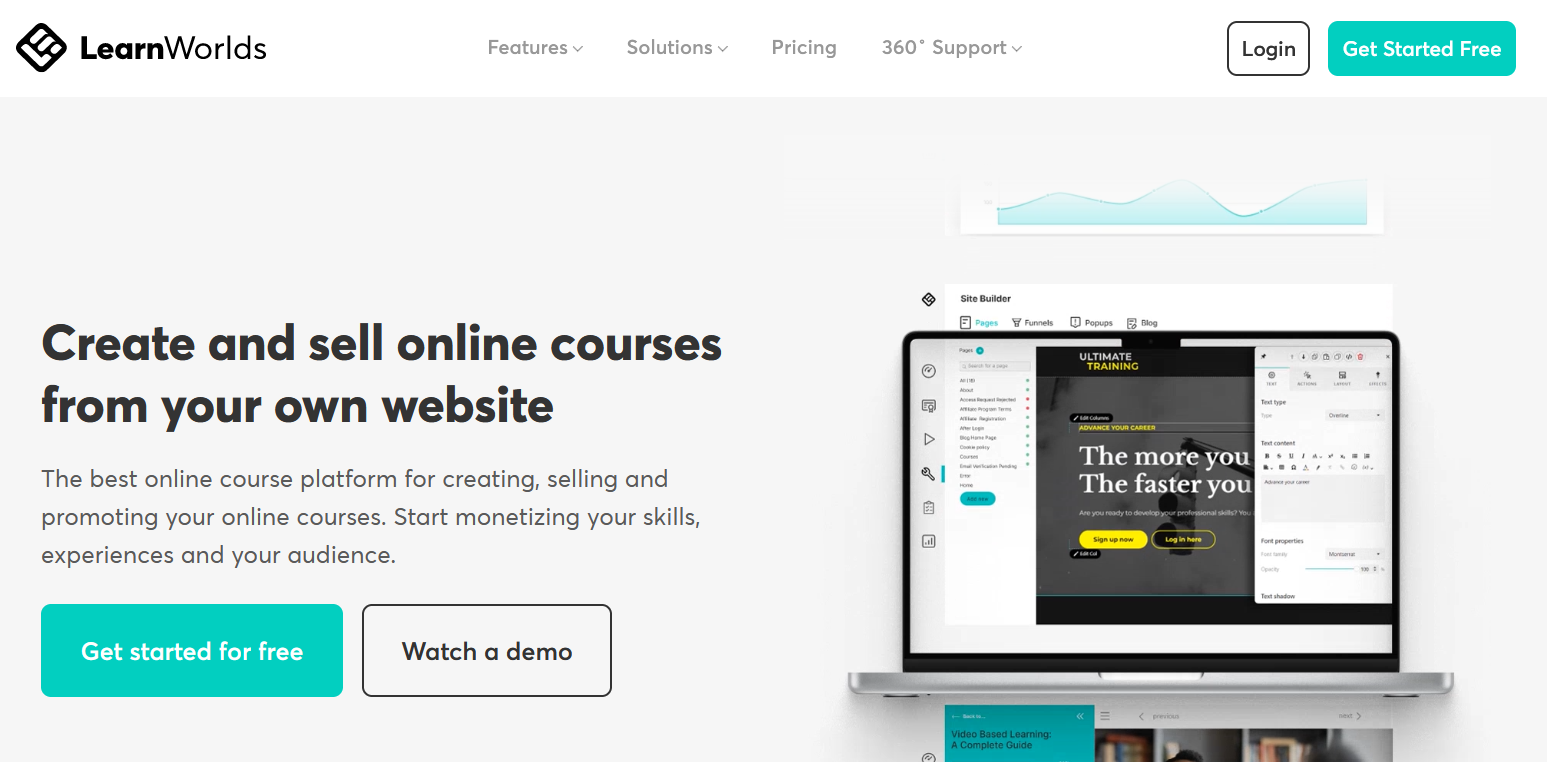
LearnWorlds great set of features come at a higher price, making it a better choice for institutional learning than independent course creators. But it’s a strong choice for organizations with a dedicated learning budget.
Pros
Interactive video tools
Advanced assessment builder
SCORM compliance
Deep integrations
Cons
Expensive for solo creators
Mobile apps cost extra
Steeper learning curve
Udemy
Best course marketplace
Udemy is a course marketplace, which works on a different model. Here you upload your course to a platform and students can choose to purchase it. Or, in the case of users on a business platform membership, Udemy allots 15% of its revenues to pay creators a prorated amount.
When you bring your own students to Udemy, you keep 97% of the course revenue. When students find you via a Udemy search or promotion, you keep 37% of the revenue.
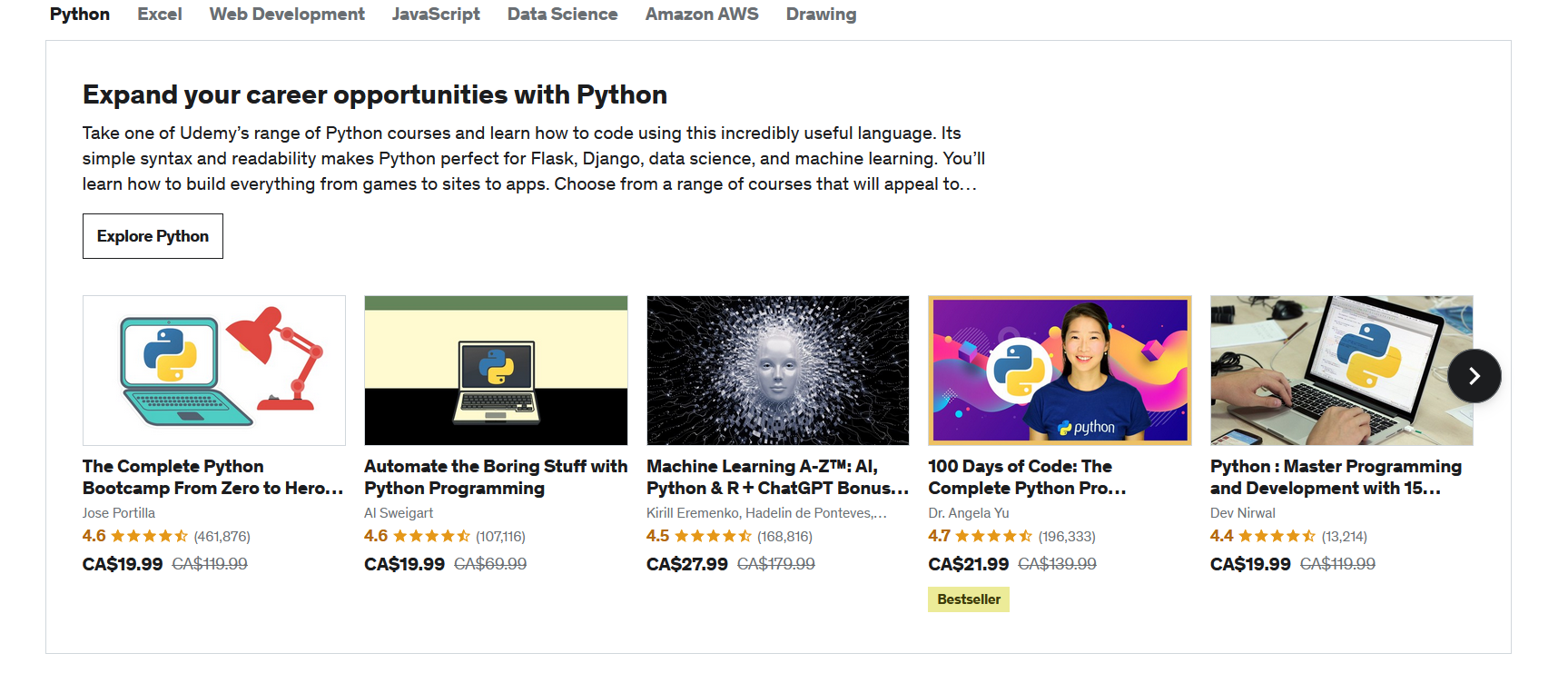
There are pros and cons to marketplaces. What’s great is that potential customers are already there, looking for courses. You get a listing, a building platform, and even some occasional marketing support (e.g. by being featured or promoted in a sale).
The downside is that you don’t own this relationship. These are Udemy’s customers, and you have limited ways to contact them or to market directly to them.
You’ll need to choose whether a marketplace or a designated course platform is right for you. But we choose Udemy for this list because it’s a good marketplace with one of the best revenue share options out there.
Here are some of the benefits of Udemy:
Access to a marketplace of 80 million students for free.
Useful insights tools to show course demand, search volume, and revenue data to help find ideas.
Good revenue share when you bring your own traffic, which could be especially good if you have some audience already.
If a course is selected for Udemy business, it’s distributed to 17,000+ corporate customers.
Excellent mobile app for every device with connections for Chromecast and Apple TV.
All in all, if you like the marketplace model for selling online courses, Udemy is an excellent option.
Pros
Course marketplace
Built-in students
Course insights
Easy building
Cons
Limited ownership
Udemy keeps up to 63% of your revenue
Lots of competition
Thinkific
Best structured async courses
Thinkific is an online course creation software that comes with a website creator and a set of course marketing tools. It has good elearning authoring tools, with opportunities to customize Thinkific sites and courses, with a drag-and-drop builder and lots of templates to work off of. You can also customize course delivery options, like dripping content.
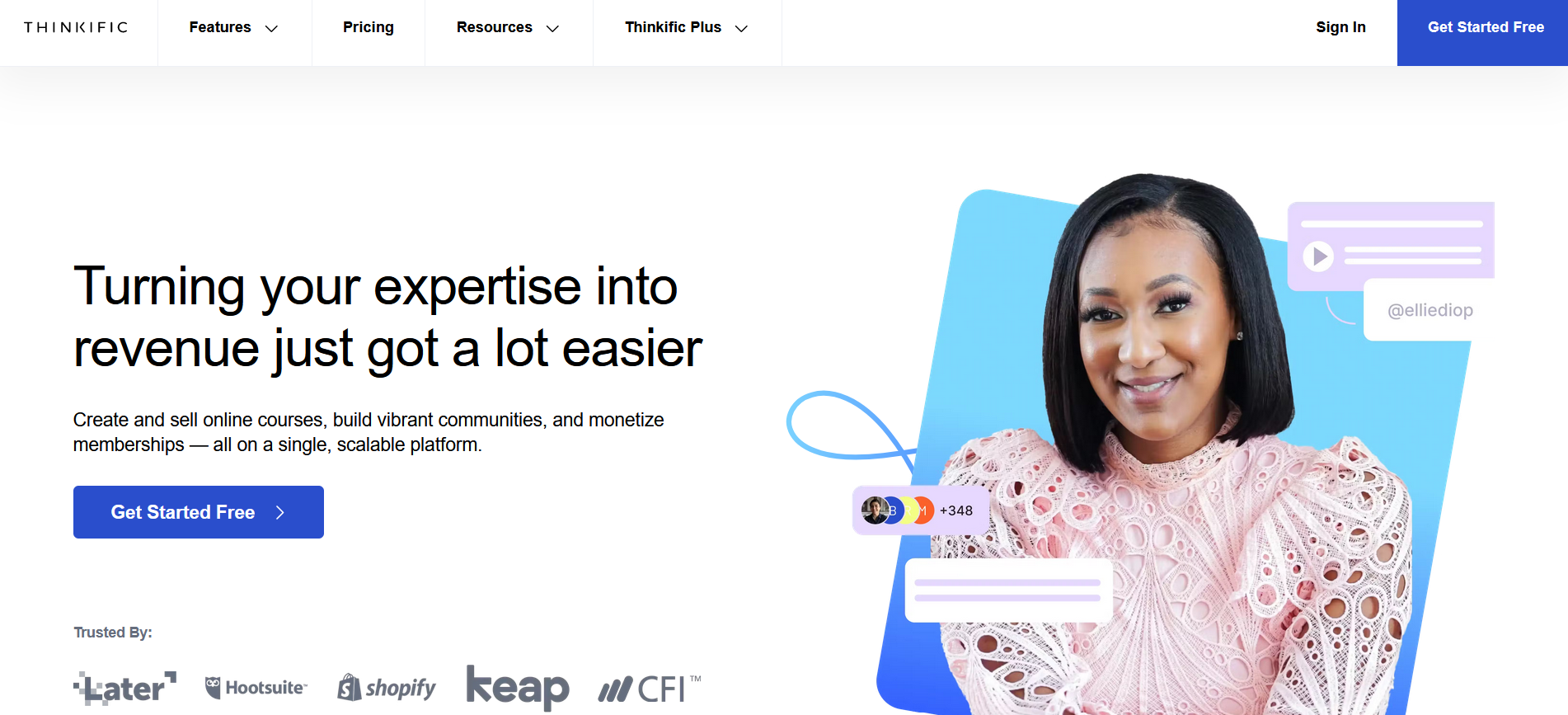
Here’s what Thinkific gives you:
Flexible course builder that’s strong for async courses with self-paced or cohort courses, dripped content, assignments, multi-content types, and progress tracking.
Advanced quiz and assessment tools with randomization, question banks, AI quiz generation, and bulk import–probably the strongest assessment tools for this price point.
Good AI writing tools built in for writing course outlines, landing pages, and emails.
Built-in sales tools with subscriptions, memberships, coupons, bundles, and an owned payment processor (TCommerce) that keeps fees down.
Simple websites, landing pages, and emails built in.
Thinkific can technically handle cohort courses, but this is a weak point since it doesn’t have native livestreaming features. It also has very limited community tools–the community option is just a basic forum with no advanced engagement features.
Note that Thinkific has very poorly rated course apps, rated 1.9 on the App Store and 3.2 on Google Play as of writing.
Pros
Good async course platform
Excellent quiz building
AI writing tools
Simple marketing features built-in
Cons
No native livestreaming
Very simple communities
Low-rated apps
Podia
Best website builder with simple courses built-in
Podia is a website builder first, with solid tools for building and hosting your site. However, it has the option to add in sales of physical and digital products, and courses is one of its offers.

Here’s what Podia gives you:
Full website building with drag-and-drop pages, templates, blogging, custom domains, and SEO tools.
Built-in email marketing with automations, audience segmentations, and one-click blogs to emails.
Sell everything in one place including physical products, digital downloads, memberships, and courses.
A simple–yet functional–course platform with self-paced course and video hosting, discussion forums in each course, and progress tracking.
E-Commerce tools with built-in affiliate program.
Podia is a great website builder. But its course platform is really simple, which course-builders need to understand. It has no apps either.
The best use case is for a powerful website selling simple learning experiences–especially if you need other e-commerce tools integrated.
Pros
Powerful website builder
Drag & drop building with templates
Built in marketing
Sell physical products
Cons
Very basic course platform
No communities
No livestreaming
No apps
Conclusion
After all the options, there’s one thing to remember. Different platforms have different focuses, different build philosophies.
The best platform is the one that does what you need it to. And hopefully this guide helped you figure that out.
If you’re building courses and communities together, why not give Mighty Networks a try? It’s G2’s #1-rated community platform, and courses are integrated seamlessly. And for branded apps, Mighty has built course apps for 600+ brands and creators including Tony Robbins, Gary Vaynerchuk, TED, Cambridge University, Jim Kwik, Mindbody, Ashley Fox, and Zach Bush MD.
You can try it totally free for 14 days – no credit card required.
Ready to launch your online course?
FAQs
What is online course creation software?
Online course software gives you virtual pedagogical and technical tools to design, build, and deliver course content to students. While there are different kinds of online course software, all of them can organize and transmit learning content.
Most online course software has two different parts: elearning authoring tools and the learning management system.
The best online course software will do four things:
Allow you to organize your content in an engaging and easily digestible way.
Enable you to build and foster engagement around your online course where your participants can connect with each other.
Give you the tools to manage a course business and gate behind a paywall.
Customize your course to fit your needs.
What are elearning authoring tools?
Elearning authoring tools are the in-course features that let you create the course content and serve it to members. It's the actual content engine of the course.
For example, a course module you can add text and video to is an elearning authoring tool. A course sales page is not.
Common elearning authoring tools
Content-building: Course content is instructional, it needs a learning format. At a minimum, course authoring tools need to host text and images.
Video capability: Most courses are multimedia and require video. Pre-recorded is common, but livestreaming is becoming a must-have feature for cohort-courses.
Assessment tools: Test students with quizzes, exams, dripped content, and offer feedback.
Member progression tools: The ability to enroll, track progress with analytics, and contact members.
What is online course software?
Online course software is the combination of elearning authoring tools and a learning management system. While elearning authoring tools give you the ability to create and deliver course content, the online course software it lives in is what lets you run a course-based business.
It's okay that these are confusing! Since most modern course platforms just put these two together, it's more common to talk about "online course software" than "elearning authoring tools."
The only place you'd really see the difference is with institutional-built courses. For example, a qualified instructional designer might focus on elearning authoring tools, while a course manager handles the operations of the course (sales, tech support, community management, etc.)
Most online course creators do both. And most course software combines the two so effortlessly you don't really think of the differences.
What tools should I look for in a course software?
In addition to the tools to deliver content, here are some of the other tools you can find in online course software. We'll start with the most common on top and move to the less-common features (depending on the online course software).
Human connection tools Many elearning authoring tools and course software also have these features.
Chat & messaging: Be able to reach your students, support questions, etc.
Online communities: Enabling connection and collaboration between students and experiencing member-led growth.
Virtual events: Tools to support events or a cohort course.
Discussion forums and activity feed: Host discussions and keep members up to date.
Apps: For many course creators, apps are a necessity. Make sure you know if they’re important to you or not.
Member management & sales
Not all course authoring software can support sales and payments. Unless you're with an institution or offering a free course, choose a platform that lets you handle payments all in one place. It will save you a lot of headaches.
Member profiles: Create member profiles and track member data (members can also often see each others' profiles)
Collect payments: A payment gateway that lets you build paywalls for your course and collect payments (ideally in different currencies).
Create bundles and plans: Courses can be sold with access to events, coaching, a community, etc., and abilities to offer discounts and custom sales.
Branding features Finally, elearning authoring tools that offer branding features let you deploy under your brand–if customization is important to you.
In-course branding: Giving the LMS and relevant software the look and feel of your brand including light & dark mode.
Custom urls: Owning your domain name for the course.
Customized landing and sales pages: These help to sell your course.
Branded apps: Deploy your course under your brand in the App Store and Google Play Store.
Do I need an existing audience to sell courses online?
Not necessarily. Some creators rely on a platform that has members built-in, like Udemy. Some creators will build a community first then add a course. Or if you’re an organization or already have an email list, you might have ways to sell without needing a big audience.
What's the difference between a course platform and a course marketplace?
A course platform gives you your own space to build, brand, and sell courses. You own the student relationship completely, and can customize and adapt your course, manage upsells, and add on things like communities.
A course marketplace comes with a built-in audience of people looking for courses, which can be an asset. But you don’t own the relationship with the students, and in many cases have almost no way to engage with them. Course marketplaces also don’t usually let you add any of your own branding–because the brand is dictated by their platform.
Can I sell courses without a website?
Yes, every platform on this list includes landing pages and/or sales pages even if they don’t include full website building. In most cases, course creators don’t need complex websites. On a modern course platform, most content delivery and engagement happens on the backend.
Ready to start building your community?
Start a free 14-day trial to explore Mighty—no credit card required.
More like this


Join Mighty Community
Learn the principles of Community Design™ (and see them in action) alongside thousands of creators and entrepreneurs. It's free to join!


Online Courses
Creating a Course
Teaching a Course
Course Platforms
Selling a Course
Communities & Memberships
Community Platforms
Managing a Community
Building a Community
Growing a Community
Monetizing a Community
Creators & Entrepreneurs
Monetization
Content Creation
Starting a Business
Website Builders
Creating & Managing a Website
Events
Event Platforms
Hosting & Marketing Events
Branded Apps
Creating a Mobile App
Coaching Apps
Community Apps
Coaching
Mastermind Groups
Starting a Coaching Business
Coaching Platforms
Filter by Category
Online Courses
Communities & Memberships
Creators & Entrepreneurs
Events
Branded Apps
Coaching
Start your free trial
14 Days. No Credit Card Required.